


Homemade basil pesto takes less than ten minutes and five ingredients. The key to the result lies in the order you put it together and in your choice of olive oil: an oil with a green fruitiness, drizzled in after the solids have been blended, and never heated.
In August, basil is at its peak. The leaves are broad, fragrant, with no bitterness. It's the ideal moment to make a homemade pesto, build up a stock for the autumn, and understand what sets a living sauce apart from an industrial preparation.
What the official pesto genovese DOP recipe says

The ingredients of pesto DOP Genovese
DOP basil pesto is a protected designation. To carry the name, the recipe has to meet precise criteria: DOP basil from Genoa, Italian pine nuts, Parmigiano Reggiano or Pecorino sardo, garlic from Vessalico (Liguria), sea salt, and extra virgin olive oil from Liguria. No substitute is allowed under the official designation.
This regulatory framework is worth knowing, even for a homemade version. It sets the proportions and the balance that give pesto genovese its recognizable taste: basil in the lead, cheese in support, oil as the binder, garlic as a discreet background note.
What you can adapt at home
The homemade version isn't bound by the designation. You can swap the pine nuts for cashews or flaked almonds if you like, use parmesan on its own, or adjust the amount of garlic to your taste. What doesn't change: the quality of the basil and of the olive oil. Those are the two ingredients that carry the flavor.
The ingredients and proportions for a successful pesto

The proportions for 4 people
For 4 people, here are the quantities to stick to:
- Fresh basil (leaves only): 50 g
- Extra virgin olive oil with a green fruitiness: 80 ml
- Pine nuts: 30 g
- Grated parmesan: 30 g
- Grated pecorino: 15 g
- Garlic: 1 small clove
- Sea salt: 1 pinch
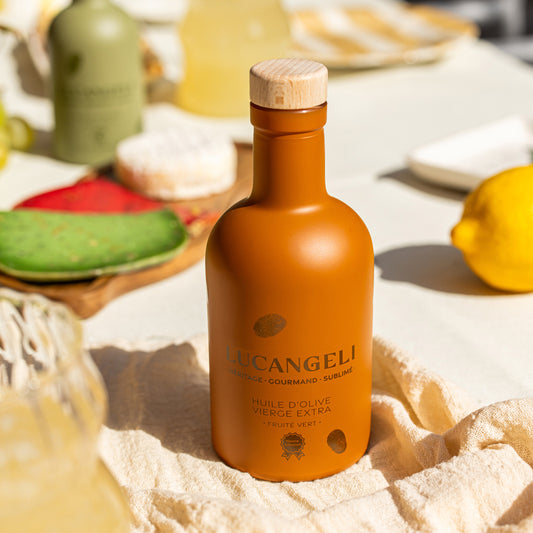
For the oil, a green fruity olive oil is the choice that fits the traditional recipe best. Green fruitiness brings herbaceous notes and a slight peppery bite that carry the basil further without crushing it. A ripe fruity oil, softer and more buttery, dulls the character of the pesto. The Carolea and Coratina varieties from Calabria, harvested early in the season, give exactly that profile: a clean attack, clear bitterness, length on the palate.
The order of assembly, step by step
- First blend the pine nuts on their own, for a few seconds, to crush them coarsely.
- Add the basil, the garlic and the salt. Blend in short pulses to avoid warming the leaves.
- Mix in the parmesan and the pecorino. Blend for a few more seconds.
- Pour in the olive oil in a thin stream, with the motor running at low speed, until you get a bound but not smooth texture.
The oil should never be added at the start of blending, and above all never heated. The heat of the motor alone is enough to degrade its aromas if you blend for too long. Thirty seconds in total, no more.
How to store your homemade basil pesto
In the fridge
Pour the pesto into an airtight glass jar. Smooth the surface with a spatula, then cover it with a thin layer of basil olive oil or a neutral oil. This layer seals the pesto off from the air and slows oxidation. Keeps for 5 days in the fridge.
Darkening at the surface is the normal oxidation of basil in contact with air. Just remove the top layer before serving.
In the freezer
Pesto freezes very well. Pour it into ice cube trays, freeze, then transfer the cubes to an airtight bag. Each cube makes one individual portion. Keeps for 3 months. Thaw in the fridge the day before, never in the microwave.
Uses beyond pasta
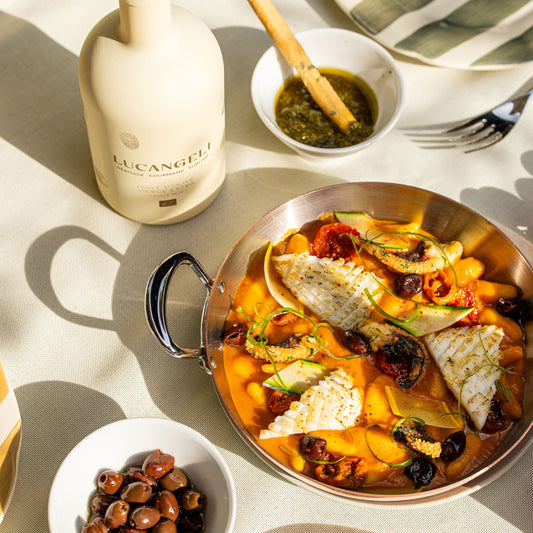
Homemade pesto isn't limited to pasta. It works as a base for a spread on toasted bread, as a condiment on grilled vegetables (courgettes, tomatoes, aubergines all in season in August), as a sauce for a bruschetta, or stirred into a sun-dried tomato tapenade for a more complex aperitif. For a full board, pair it with black olives in olive oil and a black olive tapenade: the spreads kit is designed for exactly this kind of table.
Restaurant owners who want to add an artisanal pesto to their menu or work with nut purees in their preparations can take a look at the professionals area.
Frequently asked questions
Which olive oil should you use to make homemade basil pesto?
An oil with a green fruitiness, from early-harvested varieties such as Carolea or Coratina, is the best fit. It brings herbaceous notes that carry the basil further. Allow around 80 ml for 50 g of basil leaves.
At what point do you add the oil to homemade pesto?
The oil goes in last, in a thin stream, after the solid ingredients (basil, pine nuts, cheese, garlic) have been blended. It should never be heated or blended for too long, so that its aromas are preserved.
How long does homemade basil pesto keep?
5 days in the fridge in an airtight jar covered with a layer of olive oil, or 3 months in the freezer in individual portions in ice cube trays.




 lucangeli.it