


A poached mackerel fillet, a grilled herring, oven-roasted sardines: oily autumn fish all share dense flesh and a pronounced briny flavour. To bring them out without weighing them down, pairing them with an intense green fruity olive oil is one of the most effective matches there is — as long as you understand why it works and how to use it.
Why green fruity oil pairs so well with oily fish

The logic of the pairing: bitterness and pungency against fat
Oily fish — mackerel, herring, sardines, fresh anchovies — are naturally rich in lipids. This concentration of fat gives them melting flesh and a lingering flavour, but it can also saturate the palate quickly. That's exactly where a green fruity olive oil comes in: its clean bitterness and peppery finish act as a counterpoint, cutting through the fat and extending the perception of the fish's aromas rather than smothering them.
It's the same principle as lemon on fried food — but more complex, because a green fruity oil brings vegetal notes at the same time (artichoke, fresh grass, tomato stem) that play off the iodine and natural saltiness of the fish.
The olive variety that makes the difference
Not all green fruity oils are alike. Oils made from the Carolea variety, the main cultivar grown in Calabria, harvested between late September and mid-November, offer a particularly well-suited profile: clear bitterness without being aggressive, pungency that lasts two to three seconds, and aromas of raw artichoke, fig leaf and fresh grass. This profile is powerful enough to stand up to mackerel or herring, without overwhelming a more delicate sardine.
By comparison, a ripe fruity oil — softer, with notes of ripe fruit and almond — is better suited to delicate white fish like hake, sea bream or monkfish, which call for an enveloping oil rather than a cutting one.
What tasting tells you
If you want to test the pairing before cooking, here's how:
- Pour a teaspoon of green fruity oil into the palm of your hand, rub lightly to warm it and smell: you should pick up artichoke and grass before the fruit.
- Taste the oil on its own: notice the bitterness mid-palate and the warmth in the throat (the pungency).
- Take a small bite of plain oily fish — tinned mackerel or smoked herring — with no seasoning.
- Pour a few drops of oil on the next bite and compare: the oil should extend the finish and cleanse the palate between bites, not weigh it down.
If the pairing feels too intense, it's often because the oil is too cold. Always serve it at room temperature, never straight from the cupboard if your kitchen is cold in October.
How to use green fruity oil with oily fish in your cooking
As a finishing touch, never for cooking
The rule is simple: a green fruity oil goes on after cooking, never during it. Heat destroys the volatile aromatic compounds that make a green fruity oil worthwhile — the artichoke, the fresh grass, the slight bitterness. To pan-fry a mackerel fillet, use a plain extra virgin olive oil in a large format, then finish with the green fruity oil off the heat.
The right amount for finishing: between 5 and 8 ml per serving, or one generous tablespoon. No more — beyond that, you're tasting the oil, not the fish.
Three practical uses for autumn
- Grilled mackerel: fillet placed on a warm plate, 6 to 7 ml of green fruity oil drizzled over just before serving, a few capers and a slice of lemon. The oil, warmed by the plate, releases its aromas within the first few seconds.
- Smoked herring carpaccio: thin slices, green fruity oil in a light vinaigrette with a dash of white balsamic condiment — the condiment's gentle acidity rounds off the oil's bitterness and highlights the smokiness of the herring.
- Oven-roasted sardines: roast at 200 °C for 10 to 12 minutes, then drizzle straight out of the oven with 5 ml of green fruity oil. The sardines absorb the oil while they rest for two minutes before serving.
The pairing to avoid
Avoid green fruity oil with oily fish preparations that have been marinated in oil for a long time — jarred sardines in oil, for example. In that case, the fish has already absorbed the aromas of an oil for several weeks; adding a second intense oil muddles things. Serve them instead with a squeeze of lemon and, if you like, a balsamic condiment for a sweet-sour contrast.
Choosing the right bottle for this pairing

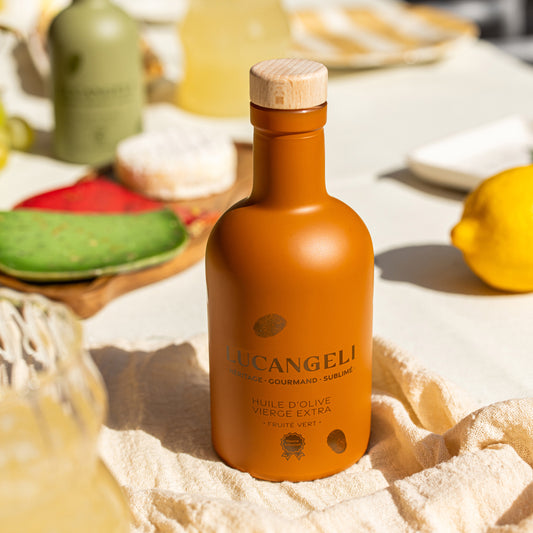
For pairings with oily autumn fish, the 200 ml format is perfect for a comparative tasting or for weekly finishing use. If you regularly use oil as a finishing touch — which is the case as soon as you cook fish two or three times a week — a larger format is more economical and ensures quick turnover, which keeps it fresh.
If you want to discover green fruity and ripe fruity side by side to understand how they differ on fish and other foods, the terracotta trio discovery gift box lets you compare several profiles in a single tasting — it's also an elegant way to give a guided pairing to someone who loves cooking.
Chefs who bring this pairing logic into their autumn menu will find practical guidance on the page for professionals, with formats and packaging suited to restaurant use.
Frequently asked questions
Can you use a green fruity oil with salmon?
Yes, but in moderation. Salmon has fattier, sweeter flesh than mackerel or herring. A green fruity oil that's too intense can dominate. Start with a smaller amount — 4 ml to finish — and choose a less pungent green fruity oil, made from olives harvested slightly riper than at full greenness.
What's the difference between a green fruity and a ripe fruity oil when tasting?
Green fruity oil is harvested early, from olives that are still green or just turning. It's more bitter and more pungent, with marked vegetal notes. Ripe fruity oil is harvested later: it's mellow, with notes of almond and butter, and almost no bitterness. For oily fish, green fruity cuts through better. For white fish or creamy dishes, ripe fruity is a better fit.
Can green fruity oil handle the autumn cold in a cellar or cupboard?
An extra virgin oil can turn cloudy or crystallise slightly below 12 °C. This is natural and reversible — just bring the bottle back to room temperature. However, repeated temperature swings speed up oxidation. Store your bottle in a cupboard away from light and temperature changes, and use it within six to eight weeks of opening to enjoy all the aromas of the green fruity oil.



 lucangeli.it