


Setting the Table: The Objects That Make a Difference
The Glass, First Tool for Tasting
For an olive oil tasting at home, the ideal glass is a medium-sized white wine glass, slightly tapered at the top. It concentrates the aromas and allows you to warm the oil in the palm of your hand before smelling it. The blue glasses used by professionals in official panels serve to mask the color and avoid influencing judgment. At home, a clear glass is perfectly sufficient: the color of the oil is part of the pleasure.
Allow one glass per oil per person. For a tasting of three oils with four people, this means twelve glasses. If you don't have enough, rinse the glasses with warm water between each oil, without soap, to avoid leaving any residue.
Arrangement of Bottles on the Table
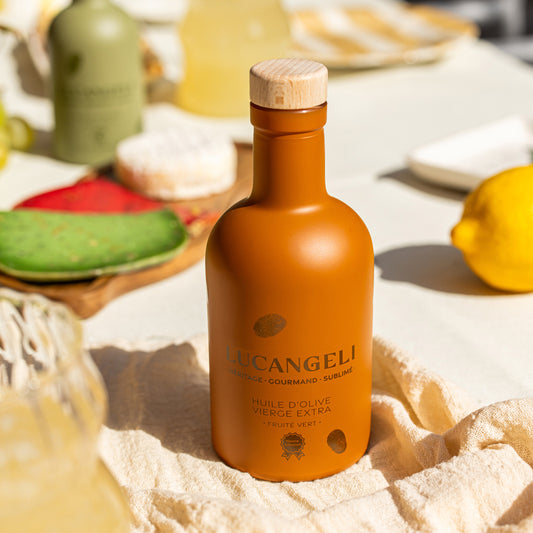
Place the bottles in the planned tasting order, from left to right. Professional convention goes from the lightest to the most intense fruity: start with a sweet ripe fruity, then a more herbaceous green fruity, and finish with a flavored oil if you have one. This progression prevents the intense notes of the green fruity from overpowering the softer nuances of a finishing oil.
Leave the bottles at room temperature for at least an hour before tasting. Oil that is too cold releases fewer aromas. The ideal serving temperature is between 20 °C and 28 °C.
The Tablecloth, Lighting, and Small Details
A natural linen or white cotton tablecloth creates a neutral background that highlights the color of the oils in the glasses. Avoid tablecloths with strong patterns that distract the eye. A few olive leaves or a sprig of basil placed in the center of the table are enough for decoration: they recall the origin of the product without overdoing it.
Light the table with natural light or warm indirect light. Cold, direct light flattens colors and makes the experience less enjoyable. If you're hosting the tasting in the evening, a few unscented candles work very well: they won't interfere with the sense of smell.
Accompanying Dishes to Serve: Bread, Vegetables, and a Few Spreads
Bread, an Essential Base
Bread is the most neutral and accessible tasting medium. Choose a country bread with a dense crumb, lightly toasted. Avoid breads with seeds, nuts, or olives: their own aromas interfere with those of the oil. A traditional baguette cut into thick slices also works very well.
Allow about 80 to 100 g of bread per person for a tasting of three to five oils. Arrange the slices in a wicker basket or on a wooden board, without covering them with a cloth: slightly cooled bread absorbs oil better than warm bread.
Raw Vegetables and Spreads
Raw vegetables provide a refreshing break between two oils. A few fennel sticks, radish slices, or heirloom tomato slices in season are excellent carriers. They cleanse the palate without dulling it like a fatty food would.
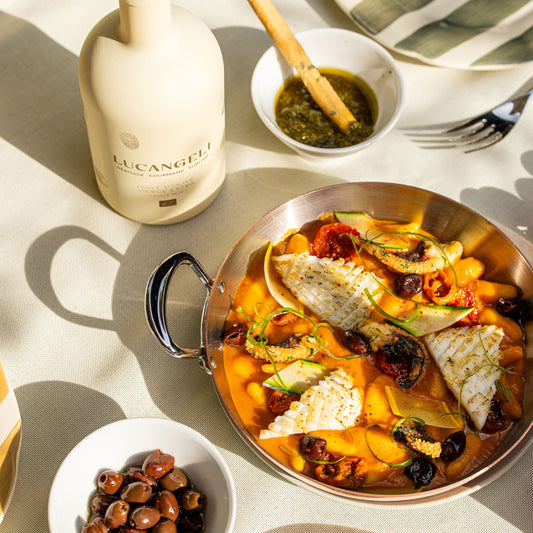
To go further, offer one or two spreads at the end of the tasting: a black olive tapenade or a DOP basil pesto allows you to see how olive oil performs in an already prepared condiment. This is a concrete way to understand the difference between a cooking oil and a finishing oil.
Water and Palate Cleansing
Serve still water at room temperature, never sparkling. Bubbles interfere with the perception of aromas. A small slice of green apple can also serve to cleanse the palate between two very different oils: this is a technique used in professional cheese and oil tastings.
Organizing the Progression: From Discovery to Comparison
Choosing the Oils to Taste
For a first tasting at home, three oils are enough. Beyond five, olfactory fatigue sets in, and the last oils are poorly evaluated. The organic olive oil trio in 200 ml is designed exactly for this purpose: three distinct profiles in a format that allows you to pour without waste.
If you want to introduce a flavored oil into the tasting, place it last. A bergamot olive oil obtained by co-crushing the fruit with the olives (and not by adding flavor) provides a frank citrus note that always surprises participants. The distinction between co-crushing and artificial flavoring is a discussion point that easily enlivens the evening.
Guiding Participants Without Overwhelming Them
Prepare a small card for each oil: origin, olive variety, type of fruitiness, harvest time. No more than five lines. The goal is not to give a lecture but to provide benchmarks. For example, Carolea, a Calabrian variety harvested in October-November, yields a ripe fruity oil with notes of tomato and sweet almond, with a moderate pungency at the end of the palate. This type of concrete detail helps participants put words to what they perceive.
Let each person write down their impressions in a notebook or on a simple sheet before discussing them aloud. This avoids the group effect where the first opinion expressed influences all others.
Concluding with a Table Pairing
The tasting should not remain abstract. End the evening with a concrete pairing: a drizzle of oil on a bruschetta, on burrata, or on some grilled vegetables. This is when participants truly understand why the choice of oil changes the result on the plate.
If you want to extend the experience with an assortment of Italian spreads, the kit of four spreads allows you to create an end-of-evening without additional preparation.
What to Provide for 4 People
Here is a list of items to gather before you start:
- Oils to taste: 3 to 5, from the mildest to the most intense
- Glasses: 1 per oil per person, clear white wine glass
- Country bread: 80 to 100 g per person, lightly toasted, plain
- Still water: 1 liter, at room temperature
- Raw vegetables: about 200 g, fennel, radish or tomato
- Descriptive cards: 1 per oil, with variety, origin, and profile
- Spreads (optional): 2 to 3, to be served at the end of the tasting
Frequently Asked Questions
How many olive oils should you provide for a home tasting?
Three oils are sufficient for a first tasting. Beyond five, olfactory fatigue sets in, and the last oils are poorly perceived. Choose contrasting profiles: a sweet ripe fruity, a herbaceous green fruity, and possibly a flavored oil at the end.
Can ordinary glasses be used for olive oil tasting?
Yes. A medium-sized white wine glass, slightly tapered at the top, is perfectly suitable. The blue glasses used by professional panels are only to mask the color. At home, a clear glass also allows you to observe the oil's color, which is part of the pleasure.
What bread should be chosen to accompany an olive oil tasting?
A country bread with a dense crumb, lightly toasted, is the best medium. Avoid breads with seeds or olives whose own aromas interfere with those of the oil. A traditional baguette cut into thick slices also works very well. If you are hosting connoisseurs, you can also offer raw vegetables as an alternative medium.
For establishments wishing to offer an olive oil tasting to their customers, the professionals section presents available formats and accompaniments.




 lucangeli.it