

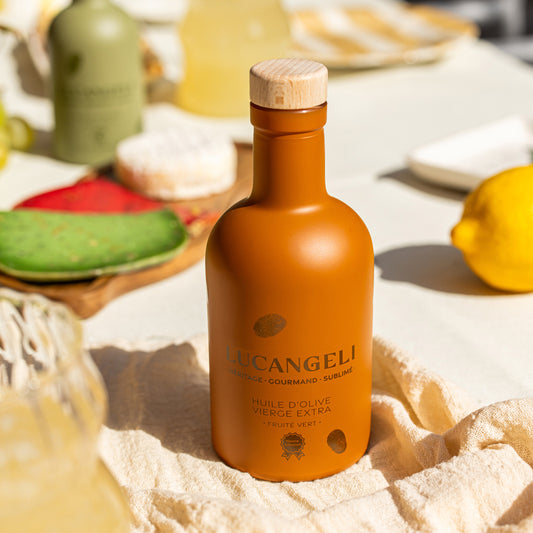
An olive oil bottle on a restaurant table is not just a simple condiment. When well-chosen and well-presented, it becomes a quality signal that your customers perceive even before reading the menu. Here's how to make it a real tool for differentiation.
What the olive oil bottle says about your establishment

The first object the customer touches
Before the bread, before the wine list, even before the server has taken the order, your customer has often already picked up the olive oil bottle placed on the table. They read the label, observe the oil's color, check its origin. This almost instinctive gesture is a moment of silent judgment. A generic bottle, without any indication of origin or variety, sends a message as clear as a carefully chosen bottle: that of attention to detail.
In establishments that focus on their table service with quality olive oil, this moment becomes an opportunity for dialogue. Staff can explain the origin, variety, and vintage. It's a gastronomic introduction that costs nothing in terms of service time but significantly enhances the experience.
Cooking oil and table oil: two distinct items
A common mistake in restaurants is to place the same oil used in the kitchen on the table. These two uses serve different purposes. In the kitchen, volume is paramount: a 5-liter container helps control material costs for cooking, marinades, and sauces. In the dining room, presentation and aromatic profile are what matter.
For the table, a 200 ml or 500 ml bottle is more suitable: it's regularly replenished, stays fresh, and allows for a specific aromatic profile. A 200 ml organic green fruity oil bottle, for example, offers a distinct pungency and herbaceous notes that immediately enhance a carpaccio or bruschetta. A ripe fruity oil, rounder and milder, is better suited for grilled fish or roasted vegetables.
Which size to choose depending on the type of establishment?
The choice of format depends on the service pace and the number of covers. Here are practical guidelines by establishment type:
- Bistro or brasserie with 50 to 100 covers: 500 ml format, to be replenished every 2 to 3 days per table.
- Gastronomic restaurant: 200 ml format, replenished at each service.
- Hotel, breakfast: individual 200 ml format or shared 500 ml, replenished daily.
- Caterer or buffet: 1-liter or jeroboam format, depending on the buffet volume.
For events or large-scale buffets, the limited edition jeroboam also makes a remarkable presentation piece, placed as a centerpiece or on an antipasti buffet.
Choosing an olive oil that matches your menu

Variety, an often-overlooked criterion
Most olive oils offered in restaurants do not mention the olive variety used. Yet, this is what determines the aromatic profile, oxidation resistance, and consistency with the dishes served. The Carolea variety, cultivated in Calabria and harvested in November, yields an oil with a ripe fruity profile, with notes of ripe tomato and artichoke, moderate bitterness, and a present but not aggressive pungency. It is a versatile oil for the dining room, pairing equally well with white meats, grilled vegetables, or fresh cheeses.
Knowing the variety also allows you to train your team. A server capable of saying "our oil is a Carolea from Calabria, harvested in November, with notes of tomato and artichoke" creates a memorable experience. This is information your customers won't find at the next table.
Pairing oil with menu dishes
Pairing table oil with the dishes served is not an additional constraint: it's an editorial consistency. Mediterranean cuisine, with grilled vegetables, fish, and fresh herbs, calls for a lively, herbaceous green fruity oil. More roasted cuisine, with meats, mushrooms, and reduced sauces, pairs better with a ripe fruity oil, which is rounder and more persistent.
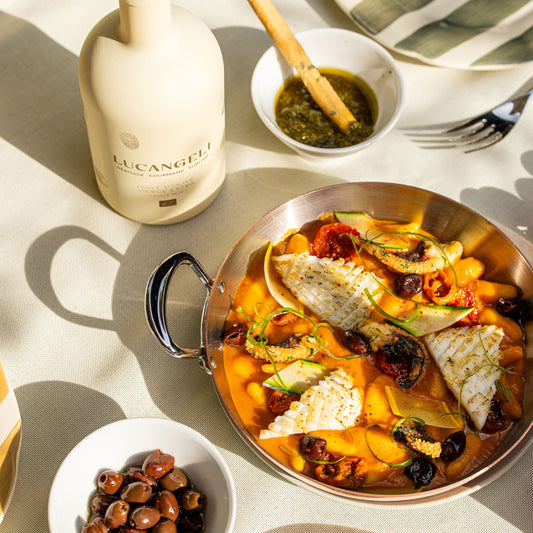
If your menu offers antipasti, consider complementing the table with pitted black olives in olive oil or black olive tapenade: these accompaniments extend the aromatic consistency and enrich the dining experience without burdening service.
Stock rotation and freshness in the dining room
Olive oil oxidizes as soon as the bottle is opened. In the dining room, a bottle that has been open for more than three weeks loses some of its aromas and can develop perceptible rancid notes. The professional rule is simple: never top up an open bottle, always open a new one. This means calibrating formats to your actual service pace.
For the professional space, orders can be organized according to the rotation rate of each establishment, with formats adapted to each station: kitchen, dining room, buffet.
The personalized bottle: a communication tool in its own right
What personalization brings to the customer experience
A bottle bearing your establishment's name or logo changes the customer's perception. It's no longer a generic product placed on the table: it becomes a house object, just like the tableware or table linen. Several establishments use this lever to reinforce their visual identity in the dining room, especially in hotels where consistency of experience is a ranking criterion.
Personalization is possible starting from 24 bottles. The design is created directly by the establishment using the online configurator: choice of visual, text, colors. For larger projects, hotel chains, restaurant groups, or establishments wishing to integrate it into their complete graphic charter, the personalization service dedicated to establishments handles the project from A to Z.
Three concrete uses of the personalized bottle in restaurants
- The table bottle: placed at each cover, it bears the establishment's name and the oil's origin. It reinforces table consistency and becomes a conversation starter.
- The bottle as an end-of-meal gift: offered to loyal customers or for anniversary tables, it extends the experience beyond the restaurant and generates organic visibility.
- The bottle provided for seminars and private events: placed on conference tables or slipped into welcome bags, it associates your brand with a quality product.
What your customers remember
The dining experience is made up of accumulated details. The olive oil bottle is one of them, just like the quality of the bread, the temperature of the plates, or the precision of the service. What distinguishes establishments that prioritize this detail from those that don't is rarely a significant investment: it's an editorial decision, that of choosing a product worth talking about and presenting it with intention.
Establishments wishing to go further in the consistency of their offering can consult the space dedicated to restaurant professionals to explore available formats, ordering conditions, and personalization options.
Frequently Asked Questions
Which olive oil bottle should be placed on restaurant tables?
Opt for a 200 to 500 ml bottle, replenished regularly to ensure freshness. Choose an oil whose variety and origin you know, so you can present it to your customers. A green fruity oil suits lively Mediterranean cuisine; a ripe fruity oil pairs better with roasted dishes and meats.
How to personalize an olive oil bottle for a restaurant?
Personalization is available starting from 24 bottles. The design is created online via the configurator: you choose the visual, text, and colors. For establishment projects or large volumes, a dedicated sales service supports the project from design to delivery.
Should there be a different olive oil for cooking and for the table in a restaurant?
Yes. In the kitchen, volume and material cost are paramount: a large 5-liter container is suitable for cooking and preparations. In the dining room, the aromatic profile and presentation matter: a 200 or 500 ml bottle, frequently replenished, guarantees freshness and allows for an oil that lives up to your menu.



 lucangeli.it