

Why mushroom polenta is October's dish in Italy
In northern and central Italy, polenta takes its place back on the table as soon as the first cool nights arrive. In Calabria it is called frascatula when it is enriched with vegetables or pulses, but the mushroom version is shared across every region, from the Alps down to the southern Apennines. This is not a leftovers dish: it is a seasonal dish, built around two ingredients that peak in October — coarse-ground cornmeal and fresh woodland mushrooms.
What sets a successful polenta apart from a characterless mush is rarely the recipe itself. It is the quality of the flour, the cooking time, and above all the olive oil used to bind and finish it.
Autumn mushrooms: which ones should you choose in October?
In October, French and Italian markets offer:
- Chanterelles, mild and lightly peppery, ideal for a creamy polenta
- Ceps (porcini), more intense and meaty, perfect for a quick pan-fry
- Black trumpets, earthy and concentrated in flavour, which hold up well to cooking
- Oyster mushrooms, available all year round but particularly tasty in autumn
- Saffron milk caps (sanguins), widely used in southern Italy for their firm texture
You can mix two or three of them. Chanterelles together with ceps give a balanced result between mildness and intensity. The essentials: do not wash them under water (wipe them with a damp cloth), cook them over high heat in a hot pan so they brown rather than release their water, and salt them only at the end of cooking.
---
The recipe: creamy polenta with autumn mushrooms

Ingredients for 4 people
- 250 g coarse-ground cornmeal (polenta bramata)
- 1 litre vegetable stock or water
- 500 g mixed fresh mushrooms (chanterelles, ceps, oyster mushrooms)
- 1 garlic clove
- 1 sprig of fresh thyme
- 40 g grated Parmesan (optional, but recommended)
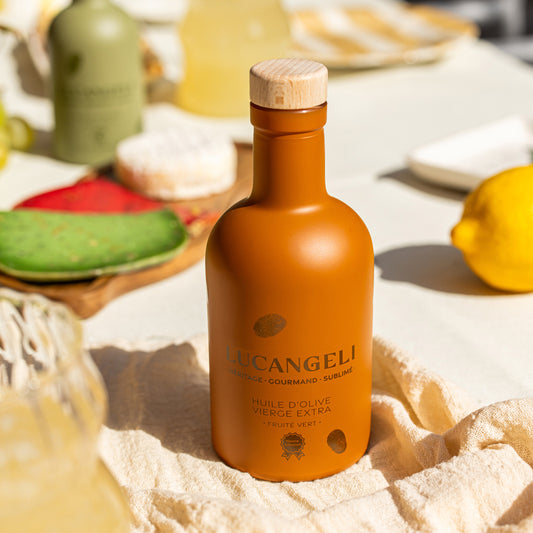
- Organic green fruity olive oil
- Salt, black pepper
Step-by-step method
1. Prepare the mushrooms
Clean the mushrooms with a damp cloth. Cut the larger ones into even pieces and leave the small ones whole. Heat a large pan over high heat with a tablespoon of organic green fruity olive oil. Add the lightly crushed garlic and the thyme. When the oil is hot (but not smoking), add the mushrooms in a single layer — do not pile them up, or they will steam instead of frying. Let them brown for 3 to 4 minutes without stirring, then turn them over. Salt at the end of cooking. Set aside.
2. Make the polenta
Bring the stock to the boil in a heavy-bottomed pan. Pour in the cornmeal in a thin stream, stirring constantly with a whisk or a wooden spoon. Lower the heat to medium-low. Stir regularly for 35 to 40 minutes (this is the time a coarse bramata needs — quick-cook versions give a less interesting texture). The polenta is ready when it comes away from the sides of the pan.
3. Stir the olive oil into the polenta
Off the heat, add a tablespoon and a half of organic green fruity olive oil straight into the polenta and stir briskly. This is what Italians call mantecare: binding off the heat to obtain a silky texture. The green fruity profile brings a light vegetal bitterness that balances the mildness of the cornmeal. Add the Parmesan if you are using it.
4. Plate up and finish with oil
Spoon the polenta into warm shallow bowls. Arrange the mushrooms on top. Drizzle half a teaspoon of green fruity olive oil over each plate just before serving. This raw finish is essential: it is what releases the herbaceous, peppery aromas of the oil, which the heat would have softened.
---
Why green fruity olive oil is the right choice for this dish

What the green fruity profile brings to polenta
A green fruity olive oil is harvested early in the season, when the olives are still green or only just turning. It has a lively attack on the palate, a marked bitterness and a pungency you notice at the end of the tasting. This profile is not a flaw — it is precisely what creates a contrast with the neutral mildness of polenta.
The mildness of cornmeal calls for an oil with character. A ripe fruity oil, rounder and softer, would get lost in the mass. Green fruity oil, on the other hand, makes itself felt without masking the mushrooms.
When you add it determines the result
Olive oil comes in twice in this recipe, and the two moments are not interchangeable:
- Into the polenta off the heat: for texture and binding, around 1.5 tablespoons for 4 people. The residual heat is enough to incorporate it without degrading its aromas.
- Drizzled on the plate: for raw aromas, around 0.5 teaspoon per plate. Do not add it while the mushrooms or the polenta are cooking, except to soften the garlic at the start — a minimal use, over moderate heat.
These amounts are deliberately precise: too little and the effect is invisible, too much and the oil takes over from the mushrooms.
A seasonal calendar that lines up
The organic green fruity olive oil comes from olives harvested at the start of the season, typically between October and November depending on the Italian region. In Calabria, the harvest begins exactly at this time. Using an early-harvest oil on an early-autumn dish is a coherence of terroir that few recipes spell out — but that any attentive cook can sense in the freshness of the result.
---
Variations and tips for adapting the recipe
The grilled polenta version
Let the polenta cool in an oiled dish until it sets (2 hours in the fridge). Cut it into slices and grill them in a ridged pan with a drizzle of organic green fruity olive oil. Place the sautéed mushrooms on top and finish with a raw drizzle of oil. The grilled texture completely changes the experience at the table.
The walnut pesto version
Add a tablespoon of homemade walnut pesto (walnuts blended with Parmesan, garlic and a drizzle of green fruity olive oil) straight into the polenta at the mantecare stage. The light bitterness of the walnuts works well with the vegetal notes of the oil.
The black olive spread version
For a more pronounced pairing, place a little black olive spread on the polenta just before the mushrooms. Black olive brings a salty depth that acts as a natural condiment and avoids adding extra salt.
The professional version
In a restaurant, polenta is made in large quantities in advance and then reheated portion by portion with a little hot stock. For service, organic green fruity olive oil applied with a pipette on the plate makes for a precise and visually distinct finish. For large volumes, the 5-litre tin of organic olive oil offers value for money suited to the catering trade. Professionals can contact the dedicated service for businesses for supply terms.
---
Frequently asked questions about mushroom polenta and olive oil
Can you use quick-cook polenta for this recipe?
Yes, but the result will be different. Quick-cook polenta (5 minutes) is pre-cooked and has a finer, less rustic texture. If you use it, reduce the amount of stock by around 20% and add the green fruity olive oil as soon as cooking ends — the mantecare stage still matters even for quick versions.
What is the difference between a green fruity olive oil and a flavoured oil for this recipe?
A green fruity oil is a plain oil whose aromatic profile — fresh grass, artichoke, green almond, light pungency — comes solely from the olive variety and the earliness of the harvest. A flavoured oil contains extracts or aromas added after extraction. For a polenta, green fruity oil is more versatile and less dominant than some flavoured oils, which risk taking over from the mushrooms.
Can polenta be replaced with semolina or rice?
These are three different textures and three different flavours. Polenta brings a starchy mildness and a grainy texture that catches sauces well. It stands up particularly well to mushrooms and to olive oil finishes. Semolina and rice have their own logic — they can go with mushrooms, but the pairing with a green fruity oil will be different. To stay in the spirit of the Italian autumn recipe, polenta remains the best base.



 lucangeli.it