

The Key Ingredients for an Italian Antipasto Platter
Making a successful antipasto platter is first and foremost a matter of selection. Italian tradition values simple, quality, local products. Marinated vegetables, spreads, olives, condiments: each element plays a precise role in balancing flavors. The goal is to offer a variety of textures and tastes – sweet, savory, tangy – so that every bite is a discovery.
Spreads and Tapenades
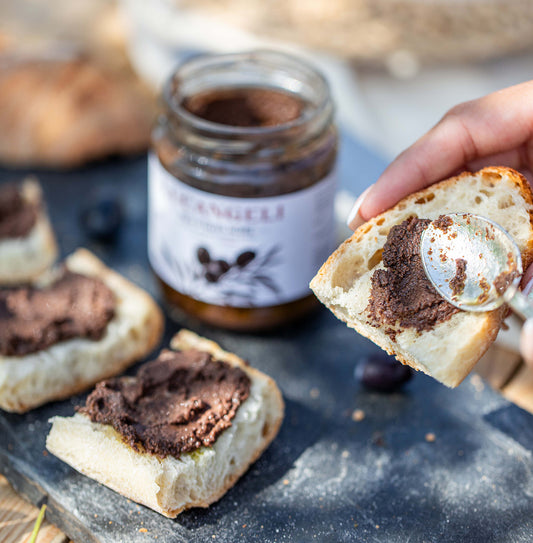
Spreads are the heart of any Italian antipasto platter. They come in endless variations depending on regions and seasons. Black olive tapenade, made from black olives with extra virgin olive oil, brings an intense and slightly bitter flavor, ideal on a slice of toasted bread. Sun-dried tomato tapenade, on the other hand, offers a sweet and concentrated note that pleasantly contrasts with the other elements of the platter.
To complete the assortment, DOP basil pesto, made from Genoa basil with a protected designation of origin, brings freshness and aroma. These three spreads form a solid base for any successful outdoor aperitif. To save time and vary the pleasures, the set of 4 tapenades allows you to create a complete platter in an instant.
Olives and Condiments

Olives are an inseparable part of Italian aperitifs. Choose good quality ones, preserved in good olive oil rather than industrial brine. Pitted black olives in olive oil are easy to snack on and fit naturally on the platter. You can accompany them with capers, pickles, cherry tomatoes, or marinated artichokes to add variety and color.
Bread, Crudités, and Accompaniments
Bread is the essential support for spreads. Opt for lightly toasted slices of country bread, grissini (thin crunchy breadsticks typical of northern Italy), or pieces of focaccia. For crudités, carrot sticks, cucumber, celery, or cherry tomatoes bring freshness and lightness. For a more generous platter, a few slices of Parma ham or bresaola harmoniously complete the ensemble.
How to Arrange and Present Your Aperitif Platter
Platter Organization
The presentation of an antipasto platter is as important as its content. A beautiful arrangement highlights the products and makes you want to serve yourself. A few simple rules allow you to achieve an aesthetic and practical result.
Start by placing the volumetric elements — small bowls or ramekins for tapenades and olives — then arrange the slices of bread, crudités, and cold cuts around them. Alternate colors: the green of the olives, the red of the sun-dried tomatoes, the beige of the bread, the green of the pesto. This alternation creates an attractive visual effect. Provide small spoons or spreading knives for each spread.
Quantities and Variety
For an outdoor aperitif for 4 to 6 people, count 3 to 4 different spreads, one or two varieties of olives, enough bread, and some crudités. The golden rule: fewer items of higher quality are always better. A platter with 4 well-chosen artisanal products will always be more appreciated than a platter overloaded with industrial products.
Olive Oil and Balsamic Vinegar: The Finishing Touches That Make a Difference
Choosing the Right Olive Oil for Your Aperitif

Extra virgin olive oil is drizzled over toasted bread, grilled vegetables, or directly into a small bowl for dipping bread. The choice of aromatic profile is important. An organic green fruity olive oil, from olives harvested at the beginning of the season, offers herbaceous and peppery notes that pair well with vegetables and cheeses. A ripe fruity organic olive oil, softer and rounder, is more suitable for cold cuts and spreads. For an original and fragrant touch, bergamot olive oil — awarded at the Épicures 2023 — brings a unique citrus note, typical of Calabria.
IGP Balsamic Vinegar as a Final Touch
A few drops of Modena PGI balsamic vinegar are enough to transform a simple bruschetta or Caprese salad. The Gold collection PGI balsamic vinegar, with its prolonged aging, develops a syrupy texture and complex aromas of cooked fruit and wood. The Silver collection PGI balsamic vinegar, more accessible, is perfect for daily use in vinaigrettes or drizzled over fresh tomatoes. In both cases, the PGI (Protected Geographical Indication) guarantees the origin and production method of the vinegar.
A successful outdoor aperitif often comes down to a few things: good products, careful presentation, and the pleasure of sharing. Italian gastronomy, with its generous antipasti and exceptional condiments, offers everything needed to transform a simple aperitif into a truly convivial moment.




 lucangeli.it