

100% Puree vs. Spread: A Distinction That Changes Everything
Pistachio puree and pistachio spread often share the same name on labels, but they are two very different products. Understanding the difference is the first step to making informed purchases and cooking well.
What a True 100% Puree Contains
A 100% pistachio puree contains only one ingredient: ground pistachios. No sugar, no palm oil, no artificial flavors. The texture is dense, slightly grainy, and the color varies from pale green to deep green depending on the variety and degree of roasting. The taste is intense, slightly bitter, with a characteristic buttery note.
What a Pistachio Spread Contains
Pistachio spread is a sweet product, designed to be spread on bread or used as a filling. It contains sugar, sometimes milk, vegetable oil, and a variable proportion of pistachios, often less than 50%. Some contain palm oil. It's a delicious product, but it cannot replace puree in a professional pastry recipe or a savory sauce.
How to Read a Label Before Buying
Three things to check before buying:
- The ingredient list: pistachio should be the first, and ideally, the only ingredient.
- Pistachio content: some manufacturers indicate it as a percentage. Below 70%, be wary.
- Presence of palm oil or artificial flavor: two indicators of a low-end product.
To summarize the essential differences: 100% puree contains only pistachios, with no added sugar, no palm oil, and comes in a 1 kg professional format. Sweet spread contains pistachios, sugar, and oil, with a pistachio content often less than 50%, and is rarely found in large formats.
Origin Makes the Difference: Bronte DOP Pistachio

Not all pistachios are created equal. In Italy, the absolute benchmark is the Bronte pistachio, cultivated on the slopes of Mount Etna in Sicily, under the DOP (Denominazione di Origine Protetta) appellation. Its color is a characteristic vibrant green, its taste is softer and more complex than Iranian or American pistachios, with a slightly resinous note.
Why Sicily Produces the Best Pistachios
The volcanic soil of Etna, rich in minerals, gives Bronte pistachios an aromatic density that other terroirs cannot replicate. The harvest is biennial: pistachio trees only produce fully every other year, which explains the higher price and relative rarity of the product.
How to Recognize Quality Puree by Origin
A quality pistachio puree indicates its origin on the label. If "Bronte" or "Sicily" is absent, the pistachio used is likely of Iranian or Turkish origin, both honorable origins but with a different aromatic profile. For use in fine pastry or gourmet cuisine, the Sicilian origin makes a noticeable difference.
How to Use Pistachio Puree in Cooking

This is where 100% puree reveals its full versatility. Unlike sweet spread, it can be used in both sweet and savory preparations.
Sweet Uses, Perfect for Summer
In August, pistachio puree naturally integrates into fresh desserts. Here are four uses to try:
- Homemade pistachio ice cream: mix the puree with a custard or coconut milk base for ice cream without artificial coloring.
- Semifreddo: incorporate a few spoonfuls into a light mousse, freeze in a mold, and serve in slices.
- Brioche cream: dilute the puree with a little liquid cream and a touch of honey to fill Sicilian brioches.
- Pastry: replace pistachio powder in financiers, tarts, and entremets. The puree brings more intensity and a more melting texture.
Pistachio spread without palm oil is a ready-to-use alternative for everyday indulgence, when you want the treat without the preparation.
Savory Uses, Often Overlooked
100% pistachio puree can also be used in savory cooking, and this is where most online recipes miss out:
- Pasta sauce: dilute the puree with pasta cooking water, a drizzle of olive oil, and grated pecorino. The result is creamy, without added cream.
- Meat stuffing: mix the puree with fresh herbs to stuff a pork fillet or poultry.
- Summer antipasti: spread the puree on toasted bread slices, add some sun-dried tomatoes in olive oil and a pinch of fleur de sel. Simple, effective, very summery.
- Vinaigrette: a spoonful of puree emulsified with vinegar and olive oil makes an original salad dressing.
The 1 kg Format, for Unlimited Cooking
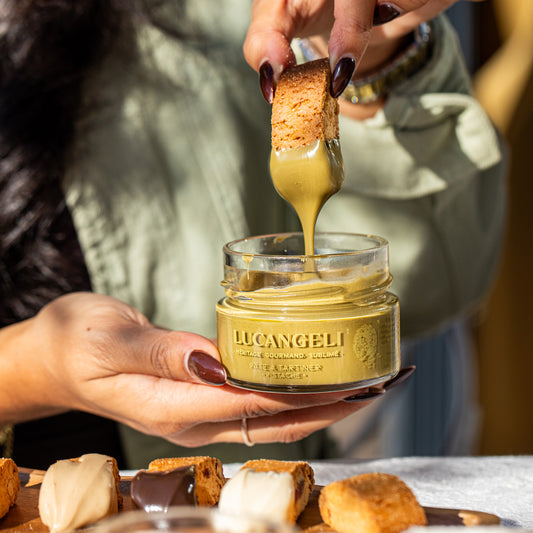
The 1 kg 100% pistachio puree is packaged without added sugar and without palm oil. This format is designed for cooks who use pistachio regularly: amateur pastry chefs, passionate cooks, or professionals who want to work with a raw ingredient. It allows for free dosing, incorporating it into savory as well as sweet preparations, and not running out in the middle of a recipe. Restaurateurs and pastry chefs can find this format and other packaging on the dedicated professional space.
If you want to discover other Italian purees and spreads, the box of five spreads is a good way to compare profiles and find your favorites. Piedmont hazelnut spread is often cited as the closest to a raw hazelnut, for those looking for intensity without excessive sugar.
Frequently Asked Questions
What is the difference between pistachio puree and pistachio spread?
100% pistachio puree contains only ground pistachios, with no added sugar or oil. Spread is a sweet product, with a pistachio content often less than 50%. Puree is used in savory and sweet cooking; spread is reserved for everyday gourmet uses.
Can pistachio puree be used in savory recipes?
Yes, and it's even one of its best assets. Diluted with cooking water, it makes a creamy sauce for pasta. Mixed with herbs, it serves as a stuffing for meats. Spread on toasted bread with sun-dried tomatoes, it makes a quick and original summer antipasto.
How to store pistachio puree after opening?
Store it in the refrigerator after opening, in its tightly sealed jar. A slight separation of natural oil may appear on the surface: this is normal, just mix before use. The shelf life after opening is generally four to six weeks.



 lucangeli.it