

Blanched or whole almond butter: what's the difference?
Almond butter comes in two main categories, corresponding to two different almond processing methods and two distinct flavor profiles. Understanding this difference is the first step to making the right choice.
Blanched almond butter
Blanched almond butter is made from blanched almonds, meaning their brown skin has been removed before grinding. The result is a light paste, with a fine and smooth texture, and a mild, slightly sweet taste. It is the most versatile version in pastry: it discreetly integrates into preparations without altering their color or texture. It is perfect for creams, cookies, soft cakes, and delicate fillings. The 100% almond butter offered by Lucangeli is made from selected almonds, ground without added sugar or oil, to preserve all the natural intensity of the fruit.
Whole almond butter

Whole almond butter, on the other hand, is prepared with unblanched almonds: the skin is kept during grinding, which gives it a darker color, a slightly grainy texture, and a more pronounced taste, with slightly bitter and roasted notes. It is particularly appreciated in rustic preparations, breads, homemade granolas, or savory sauces. Its more assertive aromatic profile makes it a characterful ingredient, to be used with discernment so as not to overpower other flavors in a recipe.
How to choose according to use?
The choice between blanched and whole almond butter depends primarily on the intended use. For fine pastry, creams, and delicate desserts, blanched butter is recommended. For more rustic preparations, morning toast, or savory sauces, whole butter brings more character. In both cases, an almond spread — lightly sweetened and ready to use — offers a gourmet alternative for toast and snacks, requiring no preparation.
How to use almond butter in cooking?
Almond butter is an incredibly versatile ingredient. It can be incorporated into both sweet and savory preparations, and can replace butter, cream, or other fats in many recipes.
In baking and desserts
This is its most common use. 100% almond butter can replace butter in cakes, muffins, financiers, or tarts. It adds moistness and a delicate flavor that naturally pairs with chocolate, red berries, vanilla, or citrus fruits. For creams and ganaches, it easily incorporates at room temperature. It is also a component of many artisanal spreads: the Piedmont hazelnut cocoa spread, for example, combines the richness of hazelnuts with the sweetness of cocoa for a gourmet and natural result. To discover several flavors in one box, the set of 5 spreads allows exploring almond, hazelnut, pistachio, and cocoa in an artisanal selection.
On toast and for breakfast

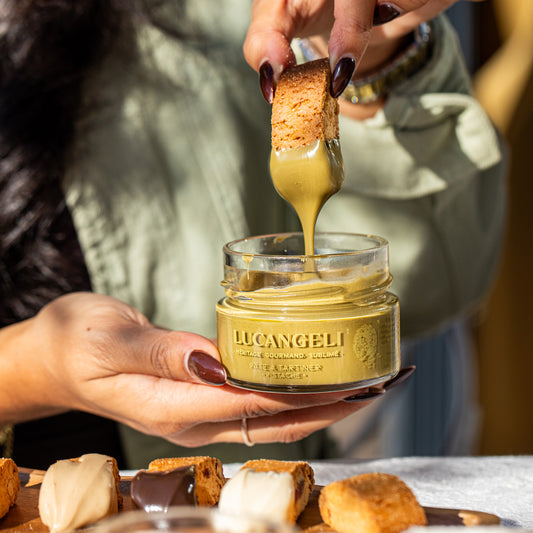
On a slice of country bread, sourdough bread, or toast, blanched almond butter spreads easily and offers a natural alternative to industrial spreads. It pairs well with honey, jam, fresh fruit, or simply a pinch of fleur de sel. To vary the pleasures, the 100% Piedmont hazelnut butter — with roasted and intense notes — or the 100% pistachio butter — sweeter and slightly sugary — ideally complement a selection of spreads for breakfast or brunch.
In savory preparations
Less known for this use, almond butter nevertheless integrates very well into savory preparations. It can thicken a sauce, replace cream in a plant-based béchamel, or be part of a creamy vinaigrette. It pairs with roasted vegetables, oriental spices like cumin or turmeric, and fresh herbs. A spoonful in a summer vegetable soup adds richness without making the preparation heavy. For cooks who wish to explore these associations, the 100% almond butter in 1 kg format is particularly suitable for regular use in professional or family kitchens.
How to choose quality almond butter?
Faced with an increasingly wide range of products, not all are equal. A few criteria can help distinguish artisanal almond butter from an industrial version.
Read the label
The first reflex is to read the ingredient list. A quality 100% almond butter should contain only one ingredient: almonds. The absence of added sugar, palm oil, artificial flavors, or emulsifiers is a reliable indicator of quality. Some industrial versions add sugar or oil to improve texture or taste: these additions alter the product and change its aromatic profile. The 100% almond butter from Lucangeli meets this criterion: a single ingredient, without additives, for an authentic flavor.
Origin of the almonds
The geographical origin of almonds directly influences their quality and aromatic profile. Mediterranean almonds — particularly those cultivated in Spain, Italy, or Sicily — are renowned for their more intense taste and higher natural oil content, which promotes a creamy texture after grinding. Conversely, mass-produced industrial almonds, often from California, have a more neutral profile. For lovers of authentic flavors, origin is as important a selection criterion as composition. Following the same terroir logic, the 100% Piedmont hazelnut butter derives its reputation from the exceptional quality of IGP hazelnuts cultivated in the Langhe hills.
Storage and texture
A 100% natural almond butter will show a slight separation between the fat and the solid part, especially after a period of storage. This is a sign of quality, not a defect: simply mix well before use. It should be stored at room temperature before opening, then refrigerated after opening, to preserve freshness and prevent rancidity. To offer a selection of artisanal butters and spreads, Lucangeli's customizable gift box allows combining almond butter, pistachio butter, hazelnut butter, and other gastronomic delights as desired — a great idea to share the taste of Italian terroir.




 lucangeli.it