


The pistachio: a nut with ancient origins
The pistachio is a highly prized nut in cooking for its delicious taste and crunchy texture. But where does this small green nut come from? What are its uses in cooking? In this article, we will discover the history of the pistachio, its origins, and its various culinary uses.
Where does the pistachio come from?
The pistachio originates from the Middle East, more precisely Iran and Iraq. It has been cultivated for over 7000 years and was already consumed by the ancient Egyptians. Its name comes from the Persian "pistah," meaning "nut." It is also very common in Turkish and Greek cuisine.
Italian pistachio: Bronte and Southern Italy

Today, Italy is one of the world's largest producers of pistachios. The Bronte region, located in Sicily, is particularly renowned for its exceptionally high-quality pistachios. The Mediterranean climate and volcanic soil of the region are ideal for cultivating this fruit tree. Bronte pistachios are protected by a Controlled Designation of Origin (AOC), guaranteeing their quality and authenticity.
In addition to Bronte, other regions in Southern Italy also cultivate quality pistachios, such as Calabria, Basilicata, and Puglia. To explore the flavors of this exceptional terroir, discover our organic green fruity olive oil, also from the sun of Southern Italy.
How to choose a good pistachio?
To choose a good pistachio, it is preferable to opt for shelled and unsalted pistachios. The color should be green and uniform, without yellow spots. The pistachio should also be crunchy and have a slight nutty smell. The quality of the pistachio directly determines the result of your recipes, whether it's a savory dish or a gourmet dessert.
Pistachios in savory cuisine: unexpected uses
Pistachios are often associated with desserts and pastries, but they can also be used in savory cuisine to add a touch of crunch and flavor to your dishes.
Pistachio and Mediterranean dishes

In Mediterranean cuisine, pistachios are often used in meat-based dishes, such as tagine or couscous. They can also be added to salads, sauces, and marinades to add texture and flavor. In Greece, they are even used in the preparation of yogurt-based sauces with crushed pistachios. To enhance your Mediterranean dishes, a drizzle of organic green fruity olive oil adds the perfect finishing touch.
Pistachio pesto and sauces
Pistachio pesto is an original alternative to traditional basil pesto. It is made from pistachios, olive oil, and Parmesan, and can be used to season pasta, vegetables, or even fish. Pistachios can also be incorporated into sauces to accompany grilled meats or fish. For lovers of authentic pesto, our DOP basil pesto with olive oil is an ideal base to revisit with some crushed pistachios.
Pistachios as an appetizer
Pistachios can also be enjoyed as an appetizer, grilled and lightly salted. They pair particularly well with other nuts, such as almonds, hazelnuts, or cashews. You can also enjoy them with a glass of wine for a gourmet and convivial aperitif. To vary the pleasures, an almond spread on crackers goes wonderfully with an Italian-style appetizer board.
Pistachios in sweet cuisine: from spread to dessert
Pistachios are highly appreciated in desserts and pastries for their unique taste and crunchy side. They are often used in spreads, but can also be incorporated into many sweet recipes.
Pistachio spread: how to choose it?
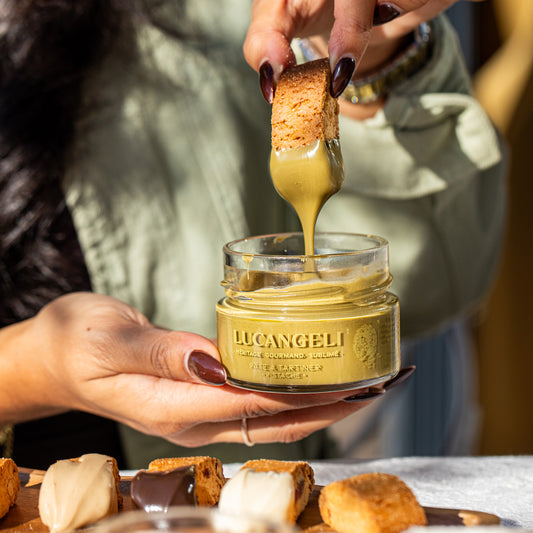
Pistachio spread is a very popular product in Italy. It is made from pistachio puree and sugar. To choose a good spread, opt for those made with quality ingredients and without palm oil. Our pistachio spread is made from quality Italian pistachios, without palm oil, for a velvety texture and authentic taste. It can be enjoyed on toast, in crepes, or as a filling for pastries.
Pistachio puree: the chef's ingredient
Pistachio puree is an ingredient widely used by chefs to add flavor and color to their creations. It can be used to make ice creams, creams, mousses, or even ganaches to accompany your desserts. Our 100% pistachio puree is made from selected pistachios, with no added oil or sugar, for optimal quality and versatile use in professional kitchens and at home.
Pistachio and other nuts: gourmet pairings
Pistachios pair very well with other nuts, such as almonds, hazelnuts, or cashews. They can also be combined with fresh fruits, such as strawberries, raspberries, or cherries, to add a touch of crunch and indulgence to your desserts. To explore all these combinations, our set of 5 spreads brings together pistachio, Piedmont hazelnut, almond, cocoa hazelnut, and bergamot in an ideal box for curious gourmets. The Piedmont hazelnut spread and the cocoa hazelnut spread perfectly complement the pistachio for unforgettable flavor combinations.
In summary, the pistachio is a nut with ancient origins, highly prized in cooking for its delicious taste and crunchy texture. Whether in savory or sweet cuisine, it offers many possibilities to delight your taste buds. To offer a gourmet journey to the heart of Italian terroir, consider our customizable gift box, ideal for sharing a passion for nuts and authentic Italian flavors. And for lovers of artisanal purees, our 100% Piedmont hazelnut puree is another gem to discover.




 lucangeli.it