


What an Italian Breakfast Really Contains
A homemade Italian breakfast consists of three elements: strong coffee, a pastry or toast, and a sweet topping. It’s light, quick, yet deeply rooted in a table ritual that can be effortlessly replicated at home.
La colazione italiana is not a hearty meal. In Italy, mornings are spent standing at a bar counter, in just a few minutes. But when brought home, it becomes something more deliberate: a carefully set table, chosen products, a moment that marks the start of the day. It is this domestic, slower, and more gourmet version that we explore here.
The Three Pillars of Colazione
Colazione relies on three distinct elements, adapted to the context:
- The drink: a strong espresso at the bar, or coffee served in a porcelain cup at home
- The bread: a cornetto or brioche in a bar setting, toast, focaccia, or country bread at home
- The topping: jam or a hazelnut spread for a quick version, artisanal spreads, honey, and fresh fruit for a more refined homemade version
The difference between an ordinary breakfast and a true colazione often lies in the quality of the topping. A Piedmont hazelnut spread, made without palm oil from IGP hazelnuts, completely changes the toast experience.
How to Set an Italian Brunch Table at Home

Setting an Italian brunch table is first and foremost about arrangement. The goal is to create a generous central platter, where everyone helps themselves freely, like Sunday family tables in Calabria or Sicily.
Arrangement of Elements
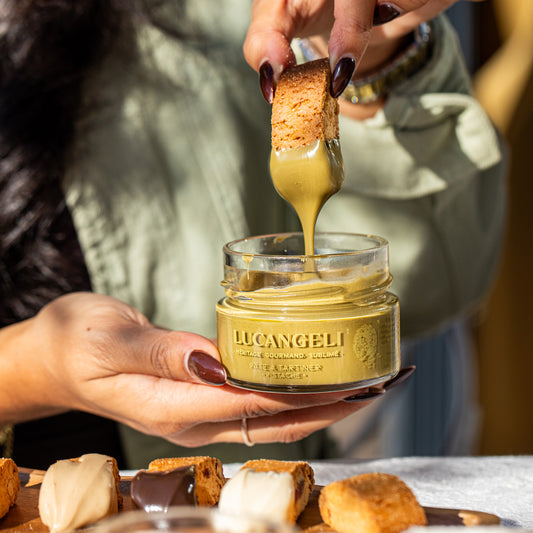
Start by placing the toppings in the center of the table: two or three open jars, a bread board, some seasonal fruits. In August, fresh figs, peaches, and apricots pair perfectly with a palm oil-free pistachio cream or an almond spread.
Then arrange cups, plates, and cutlery around this center. No need for a white tablecloth: a natural linen cloth, a few fresh herbs in a glass, and the table immediately takes on a Mediterranean look.
Toppings to Plan For
For a complete Italian brunch, plan for at least four different toppings. Here’s a selection that works year-round:
- A soft and creamy hazelnut spread
- A cocoa spread, for chocolate lovers: the Piedmont hazelnut cocoa version is particularly balanced
- A more original topping, like the bergamot spread, awarded at the Épicures d'Or 2024 — Calabrian bergamot is harvested between November and March, making it a strictly seasonal product
- Honey or homemade jam to vary textures
If you want to explore several flavors without multiplying purchases, the set of five spreads allows you to compose a varied table with a single order.
The Drink: Beyond Coffee
Coffee remains central, but Italian colazione also makes room for fruit juices. In Calabria, the morning sometimes starts with a glass of citrus juice. The pure organic Calabrian bergamot juice is an original alternative: its floral and slightly tart taste awakens the palate differently from a classic orange juice.
Olive Oil for Breakfast: A Southern Tradition

In Southern Italy, especially in Calabria, breakfast can also be savory. A slice of toast rubbed with garlic, drizzled with olive oil, and sprinkled with salt: that’s the Calabrian frisella, simple and direct.
For this type of breakfast, the chosen oil makes all the difference. An organic ripe fruity olive oil, with notes of ripe tomato and sweet almond, pairs perfectly with toast. An organic green fruity olive oil, more herbaceous and slightly peppery, is better suited for those who enjoy bold flavors in the morning.
This gesture of pouring oil directly onto bread rather than spreading it is one of the most authentic hallmarks of the Southern Italian table. It’s worth adopting, even far from the Mediterranean.
If you manage an establishment and wish to offer this ritual to your customers for breakfast, the professional area allows you to order in bulk and customize bottles for the table.
Frequently Asked Questions
What is a typical Italian breakfast?
Traditional Italian colazione consists of an espresso coffee and a sweet pastry, often a cornetto. At home, it’s enriched with artisanal spreads, toast, and seasonal fruits. It’s a light, sweet meal, served without cutlery in its bar version.
How do you set an Italian brunch table at home?
Place a platter with toppings in the center of the table: spreads, honey, fresh fruits. Add toast or pastries, cups for coffee, and some simple decorative elements like a linen tablecloth or fresh herbs. The key is the generosity of the central platter, not the sophistication of the tableware.
Which spread should you choose for an Italian breakfast?
It depends on your taste. Piedmont hazelnut is the most classic and versatile. Pistachio offers a more original note. Calabrian bergamot, awarded at the Épicures d'Or 2024, is ideal for those who enjoy floral and slightly tart flavors. To discover several flavors, a customizable gift box allows you to test the entire range.




 lucangeli.it