


Pistachio spread is one of the most cherished delicacies in Italian gastronomy. With the unique flavor of this green nut and its creamy texture, it brings true culinary pleasure to our daily recipes. But with the multitude of products available, how do you distinguish a quality pistachio spread from a soulless industrial version?
Pistachio in Italy: a story of terroir
Distant origins, Sicilian roots
Pistachio is a nut originating from the Middle East, whose cultivation developed in Sicily in ancient times. Today, the Bronte region, on the slopes of Etna, is recognized as the birthplace of excellent Italian pistachios. Its intense green color, powerful aroma, and slightly sweet flavor make it a choice ingredient in southern Italian cuisine. It is this same pistachio that goes into the best artisanal spreads, far from the standardized versions found in supermarkets.
Pistachio in Italian cuisine

In Italy, pistachio is ubiquitous: in creamy pasta (pasta alla pistacchio), Sicilian cannolis, artisanal ice creams, cured meats like mortadella, and fine pastries. It comes in both savory and sweet versions, making it a particularly versatile ingredient. Combined with quality organic green fruity olive oil, it reveals all the richness of the Mediterranean terroir. Italian chefs use it to garnish toast as well as to enhance sauces or refined desserts.
Pistachio spread: a revisited tradition
Pistachio spread is a modern variation of ancient know-how. It concentrates all the flavor of the nut in a creamy texture, easy to use daily. Unlike other more well-known spreads, it offers a more complex and less sweet aromatic palette, which is increasingly appealing to gastronomy enthusiasts. For those curious to explore other Italian flavors, Piedmont hazelnut spread or almond spread are also remarkable alternatives.
How to choose a quality pistachio spread?
Read the ingredient list
The first reflex to adopt is to carefully read the ingredient list. A quality pistachio spread should primarily contain pistachio—ideally in high proportion—followed by sugar and possibly a quality vegetable oil. If you find palm oil, artificial flavors, or emulsifiers at the top of the list, it's best to move on. A pistachio spread without palm oil is a sign of commitment to quality and more responsible practices.
Artisanal vs. industrial: the real differences
Industrial spreads often prioritize smooth texture and long shelf life, at the expense of authentic taste. To achieve this, they incorporate additives, stabilizers, and cheap vegetable oils. Conversely, an artisanal spread uses selected pistachios, without artificial ingredients, to preserve the natural aroma of the fruit. The color is often less vibrant—because it is not artificially colored—but the flavor is incomparably richer. For those who want to explore the full range of artisanal Italian spreads, the set of 5 spreads is an excellent way to compare flavors: pistachio, hazelnut, almond, and hazelnut cocoa.
Labels and origins to favor
To ensure the quality of a pistachio spread, it is useful to look at the origin of the pistachios used. Bronte pistachios (Sicily) benefit from a PDO (Protected Designation of Origin) appellation, guaranteeing traceability and quality. More generally, favor producers who clearly indicate the provenance of their nuts. For catering or pastry professionals, 100% pistachio paste is an ideal working base, without added sugar, to create custom preparations.
Uses of pistachio spread in cooking
On toast and for breakfast
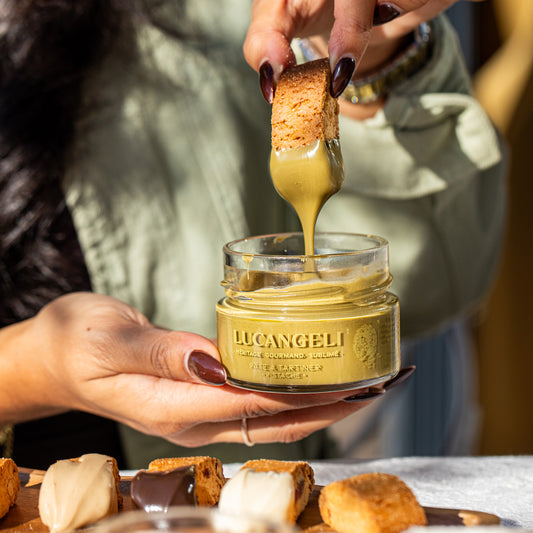
The simplest and most delicious use remains toast. On a lightly toasted slice of country bread, a spoonful of pistachio spread is enough to transform breakfast into a moment of pleasure. It also pairs very well with fresh fruits like strawberries or figs, or even with a drizzle of honey. To vary the pleasures, you can alternate with a cocoa hazelnut spread for a more indulgent and chocolatey touch.
In pastry and desserts

In pastry, pistachio spread can be incorporated into a multitude of preparations: macaron filling, entremet insert, cheesecake topping, or mixed into a cream to fill choux pastry. It provides a naturally green color and a delicate aroma that makes all the difference in Italian desserts. For savory food lovers, it can also be used as the base for a creamy pasta sauce, in the manner of a revisited PDO basil pesto.
Gourmet gift idea
Pistachio spread is also an original and refined gift idea for lovers of Italian gastronomy. Combined with other local specialties, it makes an ideal customizable gift box for all occasions: birthdays, Father's Day, thank yous, or simply to please someone. A beautiful gourmet gesture that transports its recipients to the heart of southern Italy, without leaving their kitchen.
Choosing a quality pistachio spread means above all choosing an honest product: simple ingredients, generous pistachios, no palm oil or artificial flavors. It also means choosing artisanal know-how that respects the raw material and the authentic taste of Italian terroir. Whether for everyday use, pastry, or a gourmet gift, Italian pistachio deserves all the attention it can get.



 lucangeli.it