


Pistachios have an irresistible charm: a luminous green color, a taste that is both sweet and intense, and a melt-in-your-mouth texture. But faced with grocery store shelves and online shops, it can be hard to distinguish between industrial versions and truly artisanal pistachio spreads. How do you make the right choice? What criteria should you look for? And most importantly, how do you make the most of this product in the kitchen?
Pistachio Spread: Artisanal vs. Industrial, What's the Difference?
What an Industrial Spread Really Contains
Open a jar of supermarket pistachio spread and read the ingredient list: sunflower oil, sugar, flavorings, potato starch, traces of pistachio. The green color? It often comes from a dye, not the fruit. The taste? Enhanced by artificial flavors. This type of product deviates considerably from what pistachio truly is. For lovers of authentic flavors, disappointment is often guaranteed. In contrast, an artisanal pistachio spread relies on one main ingredient: the pistachio itself, in high proportion.
Criteria for a Quality Pistachio Spread
An artisanal pistachio spread can be recognized by several signs. First, the nut content: it should be high, ideally over 40%. Second, the absence of palm oil, often used in industrial formulations to improve texture at lower cost. Finally, the ingredient list should be short and clear: pistachios, sugar, possibly a quality fat like hazelnut oil. 100% pistachio paste is also the ideal base for professionals who want to work with this nut in pastry or gourmet cooking.
Sicilian Pistachio: A World Reference
Not all pistachios are created equal. Sicilian pistachio, and more specifically that from Bronte, is recognized as one of the best in the world for its aromatic intensity and naturally green color. Grown on the slopes of Etna, in rich volcanic soil, it develops deep and complex flavors not found in large-scale cultivated varieties. Choosing a pistachio spread made from Sicilian pistachios means choosing a product rooted in an exceptional terroir.
How to Choose Your Pistachio Spread?

Reading the Label: Good Habits
Before buying a pistachio spread, take the time to read the ingredient list. The first ingredient should be pistachio or pistachio paste, not sugar or vegetable oil. Beware of vague mentions like "natural pistachio flavor" which can mask a low actual fruit content. The absence of palm oil is also a good indicator of quality. To vary the pleasures, Piedmontese hazelnut spread or almond spread follow the same selection criteria: high nut content, no palm oil, no unnecessary additives.
Texture, Color, and Taste: Unmistakable Signs
A good artisanal pistachio spread has a natural green color, sometimes slightly dull, which is normal. A vibrant, uniform green color often indicates added coloring. The texture should be dense, slightly grainy, with perceptible pistachio pieces. On the palate, the taste should be distinct, slightly sweet, with that characteristic soft bitterness of fresh pistachio. If you want to discover several flavors before deciding, the set of 5 spreads is an excellent way to explore the world of artisanal nuts.
Artisanal Doesn't Mean Hard to Find
Long reserved for delicatessens or Italian markets, artisanal spreads are now available online. Companies specializing in Italian gastronomy offer complete ranges, from pistachio to Piedmontese hazelnut, including more original creations like bergamot spread, an emblematic fruit of Calabria. These products are part of a quality approach that values terroir and artisanal know-how.
How to Use Pistachio Spread in Cooking?

For Breakfast and Brunch
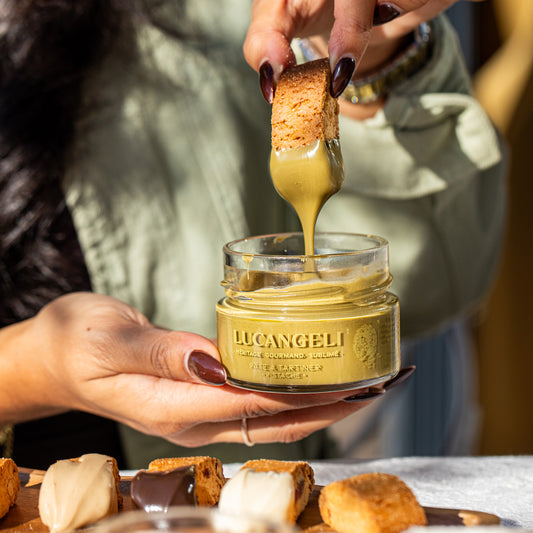
The most obvious use remains spreading: on a slice of toasted country bread, a warm brioche, or homemade crêpes, pistachio spread adds a gourmet and original touch. For a successful brunch, combine it with other flavors: chocolate hazelnut spread for chocolate lovers, or almond spread for a softer version. A platter of artisanal spreads thus becomes the centerpiece of an Italian-style brunch table, convivial and generous.
In Pastry and Creative Cooking
Pistachio spread is a precious ingredient in pastry. It can fill macarons, tarts, verrines, or roulades. Incorporated into whipped cream, it creates a light and fragrant mousse. In savory cooking, it's surprising: mixed with a little organic fruity green olive oil, it becomes an original sauce to accompany fresh pasta or grilled vegetables. Catering professionals also use 100% pistachio paste as a base for more technical preparations, precisely controlling the sugar content and final texture.
As a Gourmet Gift
Pistachio spread is one of those products that always pleases. Alone or combined with other Italian specialties, it makes an ideal customizable gift box for all occasions: birthdays, thank you gifts, year-end presents. For businesses, offering an artisanal gourmet box to clients or collaborators is an elegant way to make an impression, far from standardized gifts. Pistachio, with its strong character and roots in the Mediterranean terroir, perfectly embodies this idea of a gift that is both original and sincere.



 lucangeli.it