


Fresh tomato bruschetta is one of the simplest recipes in Italian cuisine — and one of the most often messed up. The reason? A single olive oil used for everything, with no distinction between cooking and finishing. Here's how to make a difference.
Why olive oil changes everything in a bruschetta

Bruschetta is not just toast. It's a two-step ritual: grilled bread first, then tomatoes. And these two steps don't call for the same oil.
The oil for grilling bread
To brush the slices before grilling or pan-frying, you need an oil that can withstand heat without burning or masking the taste of the bread. An organic ripe fruity olive oil is perfect here: its soft, rounded notes don't dominate, they complement. The Carolea variety, grown in Calabria, is particularly suitable for this use: it has a sweet, slightly fruity aromatic profile, with a discreet bitterness that doesn't overpower when cooked.
The oil for finishing on tomatoes
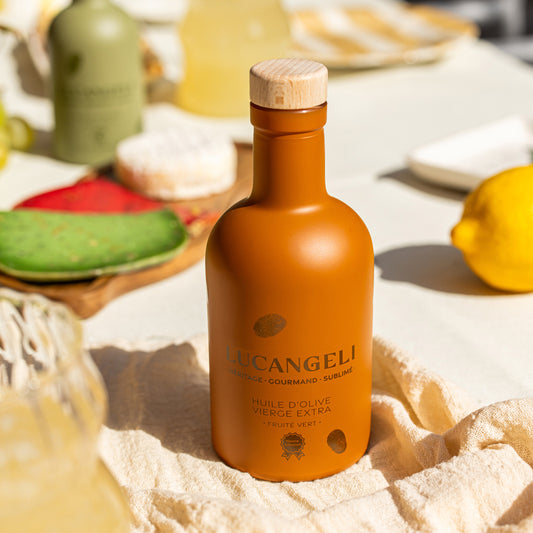
This is where everything happens. Once the tomatoes are placed on the grilled bread, a drizzle of oil poured at the last moment transforms the bruschetta. For this step, choose an organic green fruity olive oil: its herbaceous, slightly peppery notes awaken the natural acidity of the tomato and create a contrast with the warmth of the bread. The ideal dose: a generous tablespoon, about 15 ml, per bruschetta. No less, no more.
What other recipes do (and don't do)
Almost all online bruschetta recipes use a single oil, added to the tomato marinade. The result: the oil cooks with the tomatoes, loses its aromas, and the bread absorbs a bland, lukewarm mixture. The distinction between cooking oil and finishing oil is, however, the basis of professional Italian cuisine.
The step-by-step recipe, with the right techniques
Ingredients for 4 people
- 4 thick slices of country bread or Pugliese bread
- 4 very ripe tomatoes (beefsteak or round field tomatoes, in season in August)
- 1 clove of garlic
- 8 to 10 fresh basil leaves
- Ripe fruity olive oil for the bread: 2 tablespoons
- Green fruity olive oil for finishing: 4 tablespoons, or 1 per bruschetta
- Fleur de sel, freshly ground black pepper
Preparation
Start by dicing the tomatoes into medium-sized pieces. Lightly salt them and let them drain for 10 minutes in a colander: this prevents the bread from getting soggy too quickly. Meanwhile, brush the slices of bread with the ripe fruity oil and grill them over high heat, 2 to 3 minutes per side, until beautifully golden and crispy.
Immediately rub each slice with the garlic clove cut in half: the garlic incorporates into the rough edges of the grilled bread without overpowering. Arrange the diced tomatoes, add the basil leaves torn by hand (never cut with a knife, to avoid oxidation), then drizzle the green fruity oil at the last moment. Serve immediately.
The variation with dried tomato tapenade
For a more intense version, replace half of the fresh tomatoes with a layer of dried tomato tapenade spread directly on the grilled bread. The fresh tomatoes go on top. The contrast between the sweetness of fresh tomatoes and the concentration of dried tomatoes is striking, and the bruschetta holds up better over time — useful for an aperitif where guests are not all at the table at the same time.
Which oil for which type of tomato

The choice of finishing oil also adapts to the variety of tomato used. Here are the most successful combinations:
- Beefsteak (sweet, fleshy, low acidity): organic green fruity oil, herbaceous notes, poured at the last moment.
- Round field tomato (balanced, slightly acidic): organic ripe fruity oil, sweet notes, poured at the last moment.
- Cherry tomato (sweet, concentrated): organic basil olive oil, poured at the last moment.
- Heirloom tomato, black or green (complex, tangy): organic green fruity oil, poured at the last moment.
To explore several oil profiles without multiplying purchases, the trio of 200 ml organic olive oil allows you to test all three styles at the same table. For regular use throughout the summer, the 500 ml discovery duo is more economical.
Restaurateurs and caterers who wish to offer bruschetta on their menu can consult the dedicated professional section for formats adapted to high-volume use. For a personalized bottle to place on the table or to offer at an event, the bottle personalization service is available from 24 units.
Frequently asked questions
Which olive oil to use for bruschetta?
Use two distinct oils: a ripe fruity oil to brush and grill the bread, and a green fruity oil for finishing on the tomatoes. The first withstands heat better, the second brings out the herbaceous aromas that awaken fresh tomatoes.
When to add olive oil to bruschetta?
Finishing oil is always poured at the last moment, just before serving. If you add it too early, it will mix with the tomato juices and lose its aromas. The recommended dose is about 15 ml, or a generous tablespoon, per bruschetta.
Can bruschetta be prepared in advance?
The grilled bread can be prepared 30 minutes in advance and stored at room temperature. The tomatoes can drain during this time. However, the final assembly — tomatoes on the bread, finishing oil, basil — must be done at the last moment to preserve the crispness of the bread and the aromas of the oil.



 lucangeli.it